Advances in Wearable Tech Driving Precision in Endurance Event Predictions Across Virtual and Physical Platforms
David Bennett · Aug 22, 2026
Advances in Wearable Tech Driving Precision in Endurance Event Predictions Across Virtual and Physical Platforms
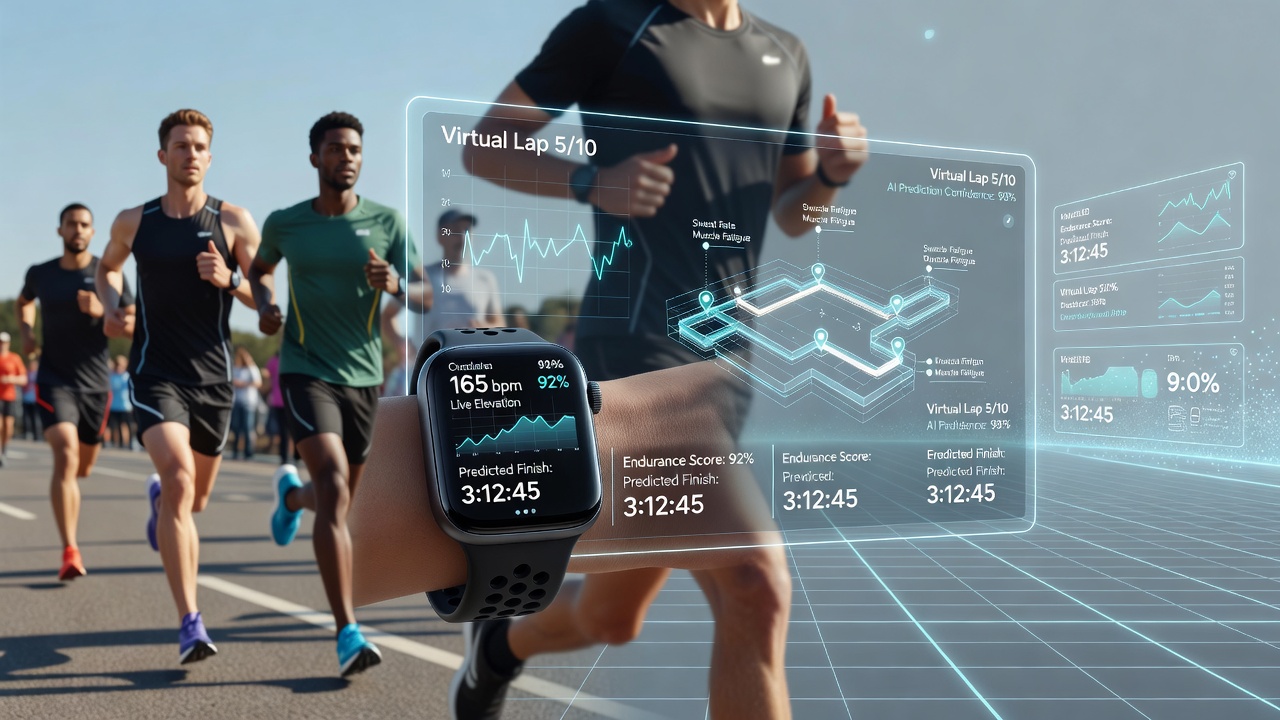
Endurance athletes and event organizers now rely on wearable devices that collect continuous streams of physiological and biomechanical data, which feed directly into predictive models for both physical races and virtual simulations. These tools track metrics such as heart rate variability, oxygen saturation, stride length, and power output while integrating environmental inputs like temperature, humidity, and altitude. Researchers have documented how the combination of these data points allows algorithms to forecast finish times and performance thresholds with increasing accuracy across marathon distances, triathlons, and ultra-endurance events.
Core Technologies Behind Current Prediction Systems
Modern wearables incorporate multi-sensor arrays that operate simultaneously, and developers have refined machine learning frameworks to process this information in real time. GPS modules provide location and pace data while accelerometers and gyroscopes capture movement efficiency, and optical sensors estimate muscle oxygenation levels. Studies indicate that when these inputs combine with historical performance records, prediction models reduce error margins for race completion estimates by measurable percentages compared to earlier single-metric approaches. In August 2026 several manufacturers released firmware updates that improved battery life and data synchronization, enabling longer training sessions without loss of continuous monitoring.
Observers note that virtual platforms such as Zwift and similar digital environments now accept direct data feeds from the same hardware used in outdoor settings. This integration creates consistent datasets that bridge physical and simulated conditions, so athletes training in mixed environments receive unified performance projections. Data shows that algorithms trained on both real-world elevation profiles and virtual resistance settings produce forecasts that account for variables like wind resistance and drafting effects even when athletes ride stationary bikes indoors.
Applications in Physical Endurance Events
Event timing companies have begun incorporating wearable outputs into official race analytics, and governing bodies have approved specific device classes for data collection during sanctioned competitions. At major marathons held in 2026, pacers and medical teams used aggregated wearable readings to adjust hydration stations and medical response points based on predicted fatigue levels among participant groups. Figures from the Australian Institute of Sport reveal that runners who shared device data achieved closer alignment between pre-race estimates and actual results when models incorporated sleep metrics and recovery scores collected in the preceding week.
Virtual Platform Integration and Cross-Environment Accuracy
Virtual endurance events have grown in participation numbers, and platform operators now embed prediction engines that draw from the same biometric streams athletes generate during outdoor training. This approach lets competitors compare projected times across formats without recalibrating separate systems. Engineers have developed standardized data protocols that allow devices from multiple brands to transmit information to shared cloud environments, which in turn power both individual forecasts and group trend analysis. One study released through the National Institutes of Health examined how heart rate and power data collected during virtual time trials correlated with outdoor performances, showing strong statistical relationships when terrain simulation matched real elevation changes.
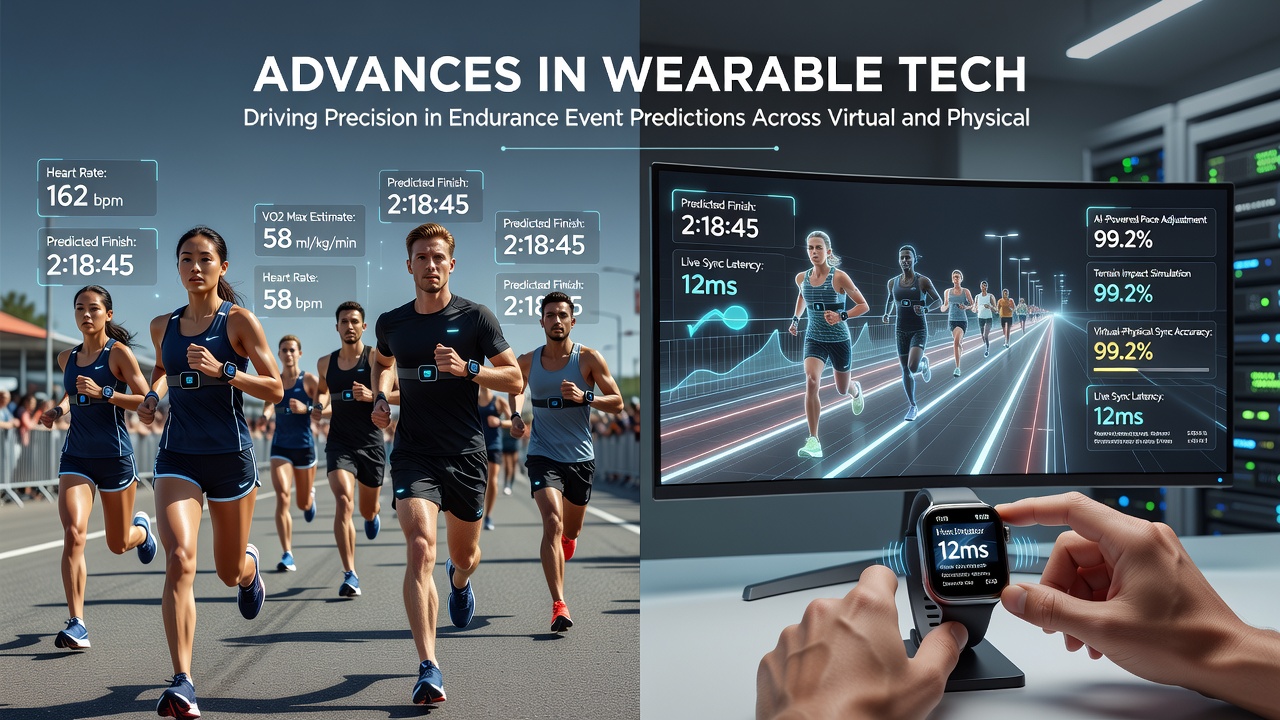
Coaches working with professional teams have adopted dashboards that display live prediction updates during both physical and virtual sessions, and these tools help adjust pacing strategies mid-event. Data collected in August 2026 from a series of hybrid competitions demonstrated that athletes who followed model-generated suggestions maintained more even effort distributions and reported fewer instances of late-race slowdowns. The same datasets also support injury risk modeling by flagging deviations in gait symmetry or sudden spikes in heart rate that precede performance drops.
Data Processing Methods and Model Refinement
Prediction accuracy depends on the quality and volume of training data, and research institutions continue to expand repositories that combine anonymized wearable records with race results. Teams at universities across North America and Europe have published peer-reviewed papers describing ensemble methods that blend neural networks with physics-based equations for energy expenditure. These hybrid models account for individual physiological limits while incorporating environmental forecasts released by meteorological services. Observers have seen prediction intervals narrow as more athletes contribute longitudinal data covering multiple seasons and varying race distances.
Regulatory agencies in several regions now review standards for data privacy and device accuracy claims, which affects how manufacturers present prediction features to users. Industry reports from organizations such as the International Federation of Sports Medicine highlight ongoing work to validate sensor outputs against laboratory measures, ensuring that inputs to prediction systems remain reliable across device generations. As a result, both amateur and elite athletes receive forecasts grounded in validated measurement chains rather than proprietary black-box calculations.
Conclusion
Advances in wearable sensor technology and associated analytical frameworks have created measurable improvements in the precision of endurance event predictions. These developments apply equally to physical competitions and virtual platforms because standardized data protocols allow seamless transfer of information between environments. Continued refinement of algorithms, supported by expanding datasets and cross-institutional validation efforts, points toward further reductions in forecast uncertainty for athletes and organizers alike.