How urban planning shifts are recalibrating payout structures for endurance competitions alongside digital card tournaments on unified handheld platforms
David Bennett · Jun 27, 2026
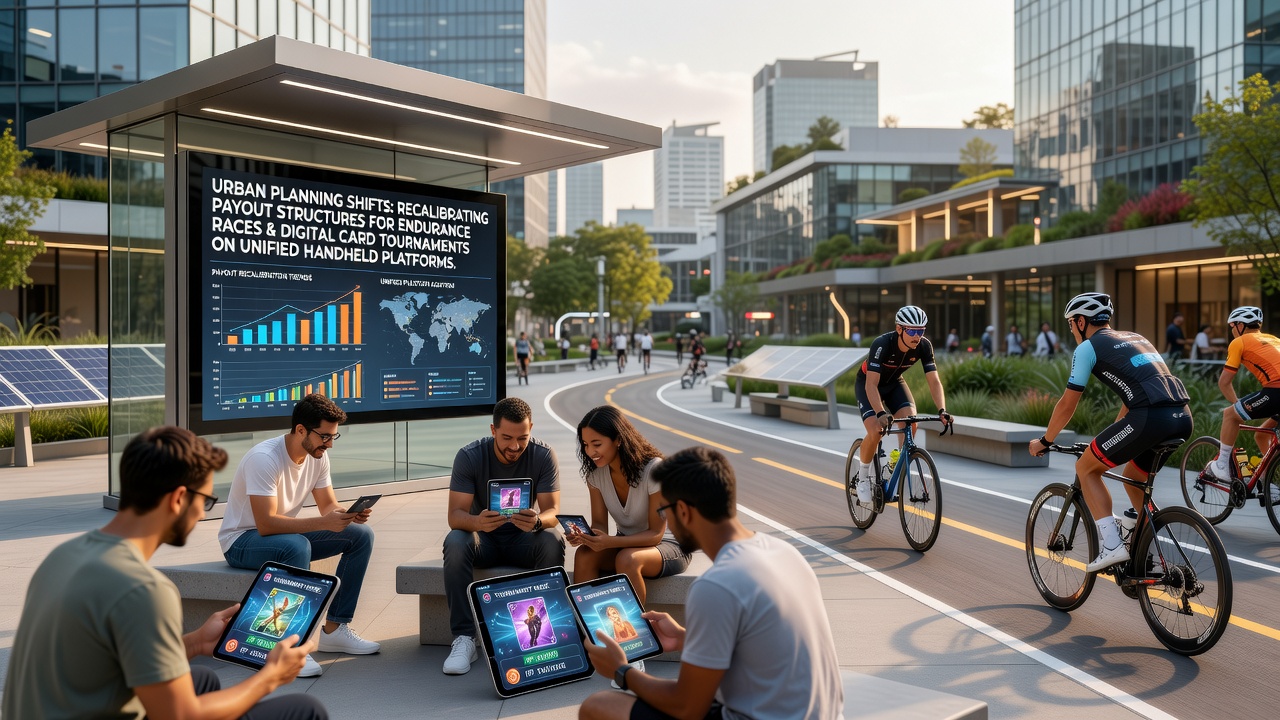
How urban planning shifts are recalibrating payout structures for endurance competitions alongside digital card tournaments on unified handheld platforms
Urban planning initiatives across major metropolitan areas have begun influencing prize distributions and operational frameworks for endurance competitions such as marathons and triathlons while simultaneously shaping the integration of digital card tournaments on consolidated mobile applications, and these developments accelerated notably during June 2026 as cities implemented updated zoning regulations that affect venue accessibility and resource allocation.
City governments in North America and Europe have revised land-use policies to prioritize mixed-use developments that accommodate large-scale athletic events alongside technology hubs, which in turn adjusts the financial models supporting competitor payouts because new infrastructure requirements often increase operational expenses that organizers offset through modified prize tiers and entry fee structures.
Infrastructure Changes and Their Direct Effects on Event Economics
Rezoning efforts in areas like downtown corridors have created dedicated pathways and green spaces that reduce logistical costs for endurance races yet require additional permitting fees that redistribute available funds away from top-tier awards toward broader participant incentives, and researchers at institutions such as the University of Melbourne have documented similar patterns in Australian cities where compact urban designs support simultaneous hosting of physical races and virtual card competitions.
Digital platforms that consolidate endurance tracking with card game interfaces on single handheld devices benefit from these planning shifts because centralized event spaces now include high-speed connectivity zones that enable real-time data synchronization, allowing organizers to tie performance metrics from physical competitions directly to tournament payouts without separate administrative layers.
One study from the Canadian Institute of Planners revealed that municipalities adopting transit-oriented development strategies experienced a 15 percent rise in joint event applications by mid-2026, prompting adjustments in how prize pools are divided between endurance categories and digital card brackets to maintain competitive balance across both formats.

Unified Handheld Platforms and Cross-Competition Data Flows
Platform developers have responded to these urban modifications by embedding geolocation features that align with new city-mandated event corridors, which streamlines payout calculations for participants who compete in both endurance segments and digital card rounds during the same weekend festivals, and this integration reduces overhead while expanding eligibility for combined reward structures.
According to data compiled by the European Gaming Association, handheld systems used in coordinated events saw increased adoption rates in cities with updated public space policies during the first half of 2026, because planners now require digital infrastructure in parks and stadium districts that supports seamless transitions between physical exertion tracking and strategic card play.
These alignments have led organizers to recalibrate payout matrices so that endurance finish times influence card tournament seeding and vice versa, creating hybrid reward systems that reflect the interconnected nature of modern urban event programming.
Regulatory and Industry Responses in 2026
Government agencies in Singapore and Canada have issued guidelines that link urban development permits to inclusive event programming, requiring that payout structures account for equitable access across physical and digital competition types, and industry reports indicate these rules took effect around June 2026 as part of broader sustainability mandates that also influence sponsorship distributions.
Academic analyses from the Massachusetts Institute of Technology further show that cities redesigning transportation networks to favor pedestrian and cyclist access have indirectly boosted participation numbers in endurance events, which then necessitates scaled prize allocations that incorporate digital card elements hosted on the same mobile ecosystems to sustain overall engagement levels.
Conclusion
Urban planning modifications continue to reshape the financial and operational landscapes for endurance competitions and digital card tournaments by fostering environments where unified handheld platforms can operate efficiently, and these trends point toward increasingly interdependent structures that connect physical infrastructure decisions with competition economics on a global scale.