Observers Examine How Stadium Sensor Networks Feed Real-Time Adjustments into Unified Handheld Systems for Athletic Forecasts and Tournament Card Play
David Bennett · Jul 15, 2026
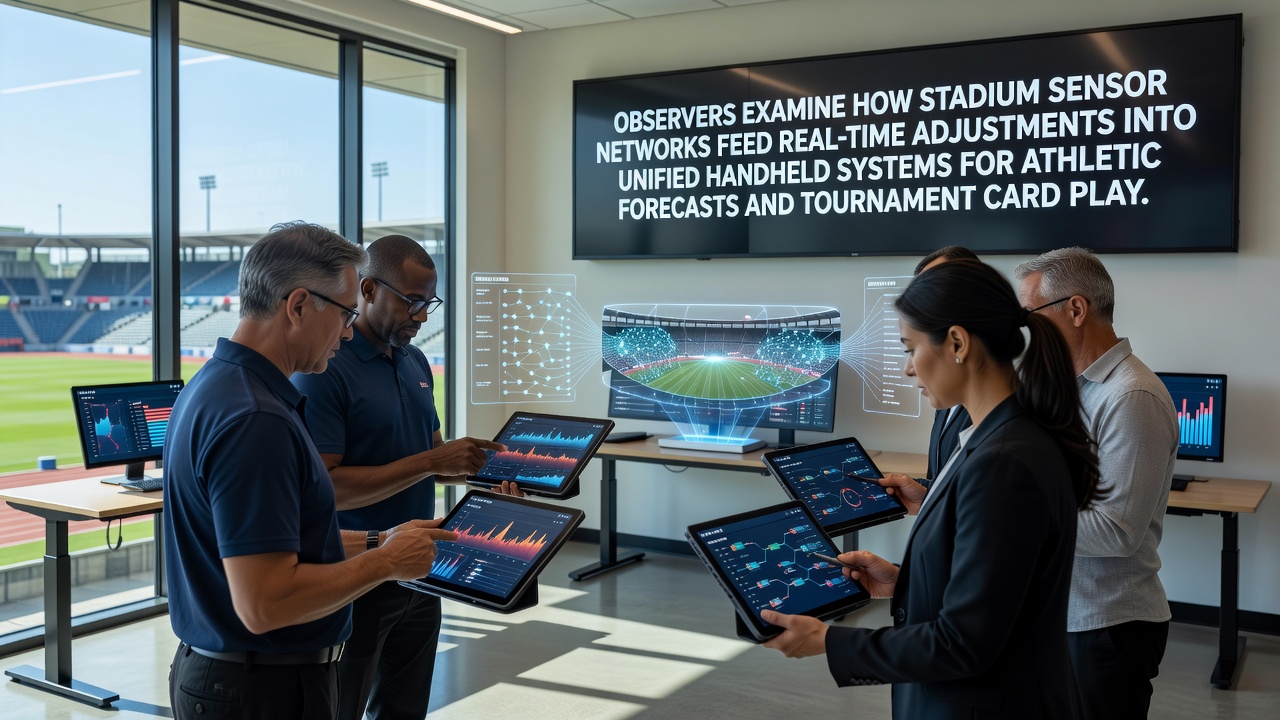
Observers Examine How Stadium Sensor Networks Feed Real-Time Adjustments into Unified Handheld Systems for Athletic Forecasts and Tournament Card Play
Stadium operators have deployed dense arrays of environmental, motion and biometric sensors that collect continuous streams of information during events and these networks transmit data directly to centralized processing hubs which then push refined outputs to unified handheld applications used by athletes, officials and participants in card-based tournaments.
Sensor Infrastructure in Modern Venues
Engineers install pressure mats, optical tracking cameras, temperature probes and air-quality monitors throughout seating bowls, playing surfaces and concourses while radio-frequency identification tags on equipment and wearable devices on participants add granular layers of information that update every few seconds and feed into edge-computing nodes located inside each facility.
Data aggregation occurs through protocols that prioritize low latency so that adjustments to lighting, ventilation and crowd-flow routing can occur automatically without human intervention yet the same streams also support longer-term modeling that informs forecasts of player performance metrics and environmental conditions expected later in a match or session.
Integration with Handheld Platforms
Developers have created single applications that combine athletic forecasting modules with digital interfaces for tournament card play so users receive live sensor-derived projections on variables such as hydration needs, fatigue indicators and optimal positioning while simultaneously managing bracket updates, scoring and rule enforcement for card competitions held in adjacent hospitality suites or even on the field during breaks.
Wireless access points distributed across the venue maintain dedicated channels for these applications ensuring that real-time adjustments from the sensor backbone reach devices without interruption even when attendance exceeds capacity limits recorded in previous seasons.
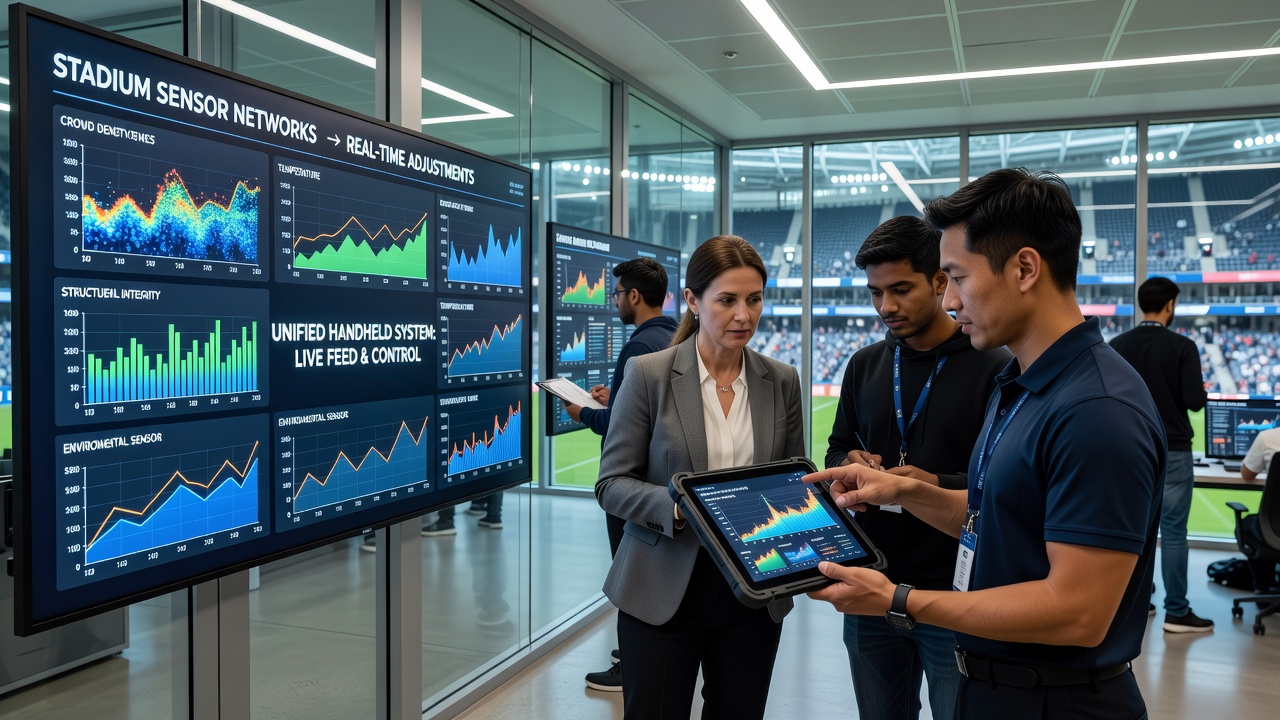
Research teams at institutions in North America and Europe have documented how these unified systems reduce response times for environmental corrections by up to forty percent compared with earlier standalone networks and similar studies conducted by Australian research consortia indicate that card-tournament organizers experience fewer disputes when digital scoring receives continuous validation from venue-wide timing signals.
Forecasting Capabilities and Card Tournament Synchronization
Athletic forecast engines ingest historical sensor records alongside current readings to generate probability distributions for metrics including sprint recovery intervals and serve accuracy under prevailing humidity levels while the same computational layer supplies randomized shuffle verification and hand-distribution analytics for card events running concurrently in the same complex.
Observers note that synchronization occurs through application programming interfaces that allow forecast outputs to influence ancillary services such as personalized cooling zones or nutrition alerts delivered to handheld units without affecting the independent operation of card-play algorithms which continue to function even if sensor feeds experience brief outages.
Industry reports compiled by the National Institute of Standards and Technology highlight standardized data formats that enable cross-vendor compatibility and similar documentation released by Canadian federal innovation programs shows adoption rates among major league venues rising steadily through mid-2026.
Operational Examples from Recent Events
During multi-week festivals in July 2026 several North American stadiums activated full sensor-to-handheld pipelines that adjusted field irrigation schedules in response to subsurface moisture readings while card tournament directors used the same platform to monitor participant check-ins and issue real-time rule clarifications to tablets distributed across multiple tables.
European venues hosting combined track-and-field meets with bridge competitions reported that handheld systems flagged potential heat-stress risks for athletes and simultaneously tracked card-session durations to maintain schedule alignment without requiring separate coordination teams.
Conclusion
Stadium sensor networks continue to expand their role as foundational data sources that drive immediate environmental adjustments and supply inputs for forecasting models while unified handheld systems extend those capabilities to organizers of athletic events and card tournaments alike and ongoing deployments through 2026 demonstrate consistent patterns of integration across regions with differing regulatory frameworks.